Surety Bonds for MSMEs — Levelling the Playing Field in Government Tenders
An MSME contractor sees a government tender worth ₹5 crore, has the capacity to execute it, but the bank guarantee requirement alone would tie up more collateral than the business has spare to offer. A larger competitor with deeper reserves faces no such hurdle. That gap (not capability or pricing) is often what decides who actually gets to bid.
Why the Playing Field Has Been Uneven
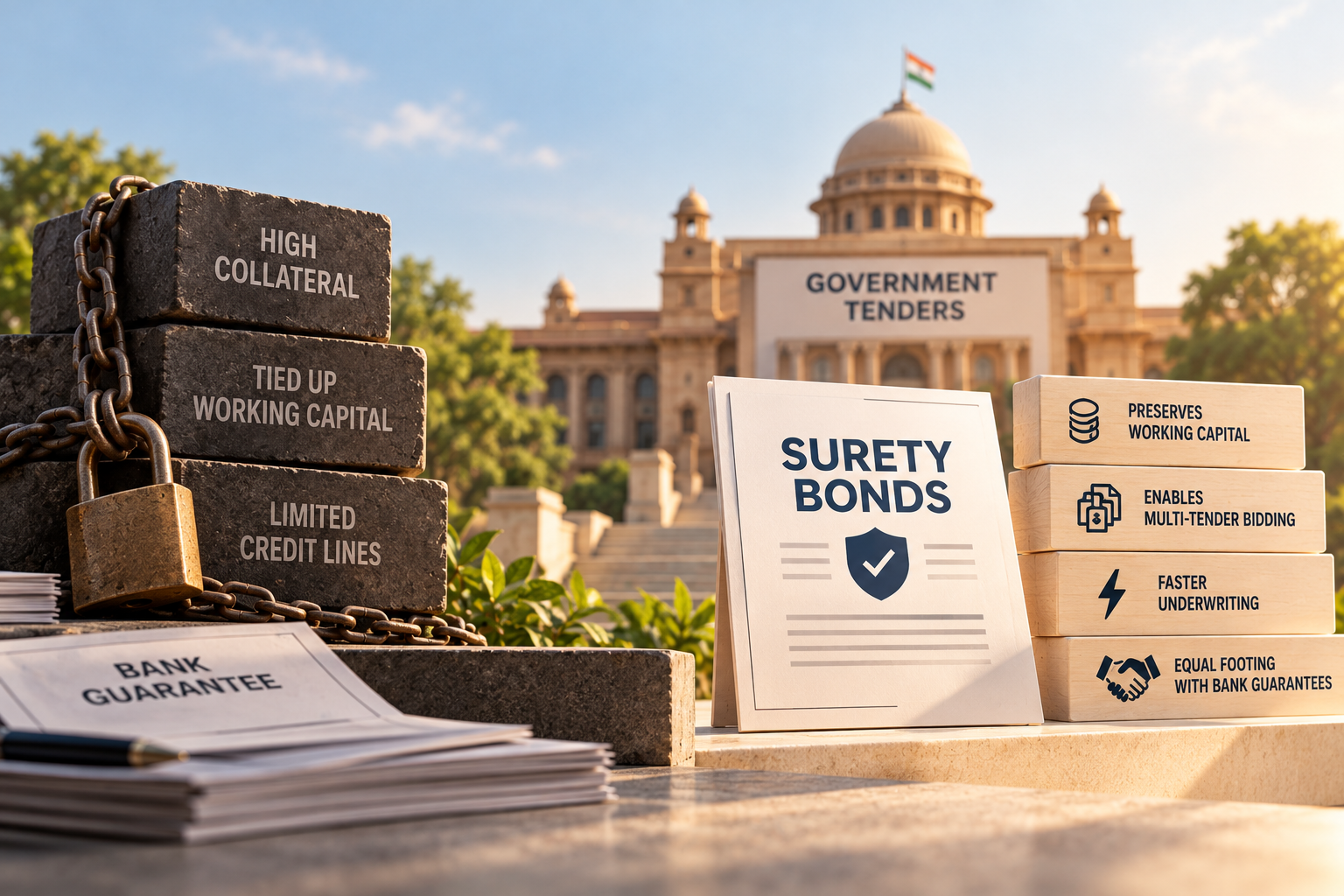
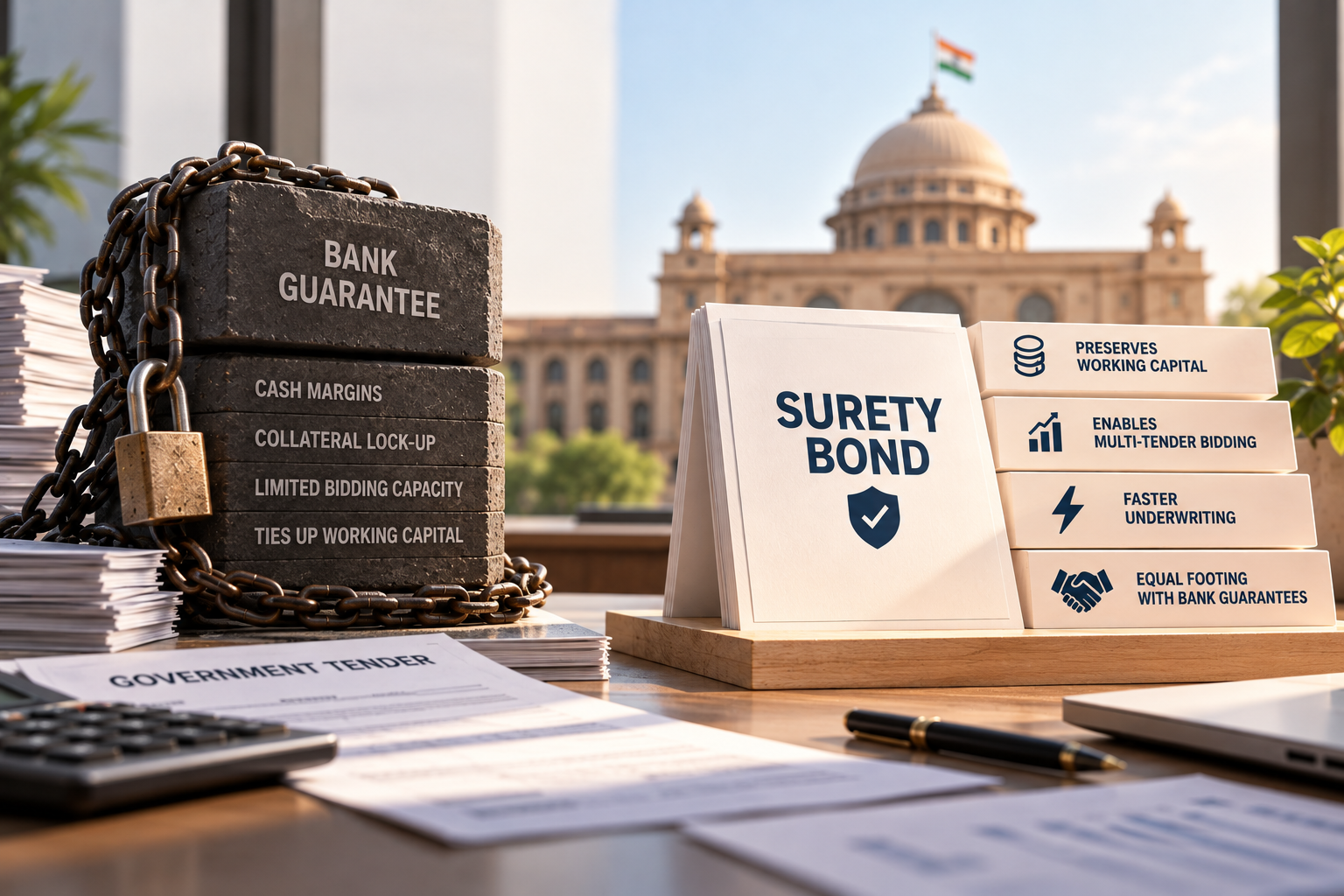
Bank guarantees (BGs) typically demand cash margins or collateral ranging from 20% to 100% of the guarantee value. Large contractors absorb this lock-up without much strain. MSMEs, working with thinner balance sheets and tighter credit limits, often cannot put up that much security across multiple tenders simultaneously, even when they possess the technical skill to deliver.
The result? Fewer MSMEs bidding simply because the entry cost was structured against them.
What Changed With Surety Bonds
Surety bond insurance offers an alternative that preserves working capital. Instead of locking up collateral, contractors pay an insurance premium (typically 0.5% to 3% of the bond value) to an IRDAI-authorised surety insurance company.
- Preserves Working Capital: Capital that would have sat as bank margin remains free to fund actual project execution.
- Protects Bank Credit Lines: Non-fund-based (NFB) limits with banks stay intact for operational needs.
- Tender Parity: Per IRDAI guidelines and Ministry of Finance directives, surety bonds can be issued as conditional or unconditional/on-demand instruments, putting them on equal regulatory and functional footing with traditional Bank Guarantees.
Why This Specifically Helps MSMEs
- Lower Upfront Outlay: Replaces hefty collateral demands with a manageable premium payment.
- Multi-Tender Capacity: Let contractors bid on multiple tenders without exhausting their limited working capital.
- Faster Underwriting: Streamlined evaluation process for businesses with clean financials and active Udyam registrations.
- Expanded Underwriting Capacities: IRDAI’s updated guidelines permit insurers greater flexibility in underwriting limits, enabling MSMEs to target larger public sector projects.
Public sector undertakings (PSUs), and some state bodies now accept surety bonds on equal terms with bank guarantees.
Getting Started
Not every insurer writes MSME-scale bonds, and pricing varies depending on contract size and sector exposure. Working with a specialized insurance broker who tracks active surety markets saves critical time when tender deadlines are tight.
Connect with Kapalin Insurance Broking to evaluate your upcoming tender pipeline and replace collateral-heavy bank guarantees with surety bonds.
Disclaimer: Insurance is the subject matter of solicitation. Kapalin Insurance Broking is a licensed insurance broker. This blog is for informational purposes only and does not constitute financial or legal advice.